

Distributed storage
The distributed cloud reduces carbon.
Deliver highlight reels, multi-angle cuts, and archived footage in minutes, with a cloud-centric pipeline that’s always on and ready to go.
Why Storj
The world’s most efficient cloud.

Uses spare hardware.
Manufacturing 1TB of HDD results in 20 kg of carbon. Storj uses spare capacity that is already powered and spinning.

Extends equipment life.
With distribution and automated file repair, hardware can be used until it fails without risking data loss.

Minimizes data creation.
Distributing data eliminates multi-region replication and Object Mount minimizes the data you download to access your archives.

Fewer data centers built.
By efficiently using spare capacity in existing data centers, this slows the need for building and powering new data centers.
How it works
Sustainable by design.
Storj slashes carbon emissions by leveraging unused hard drive space and reducing the need to replicate data for performance and durability. The distributed cloud has benefits for reducing, reusing and recycling that add up to significant carbon avoidance.
Read the white paper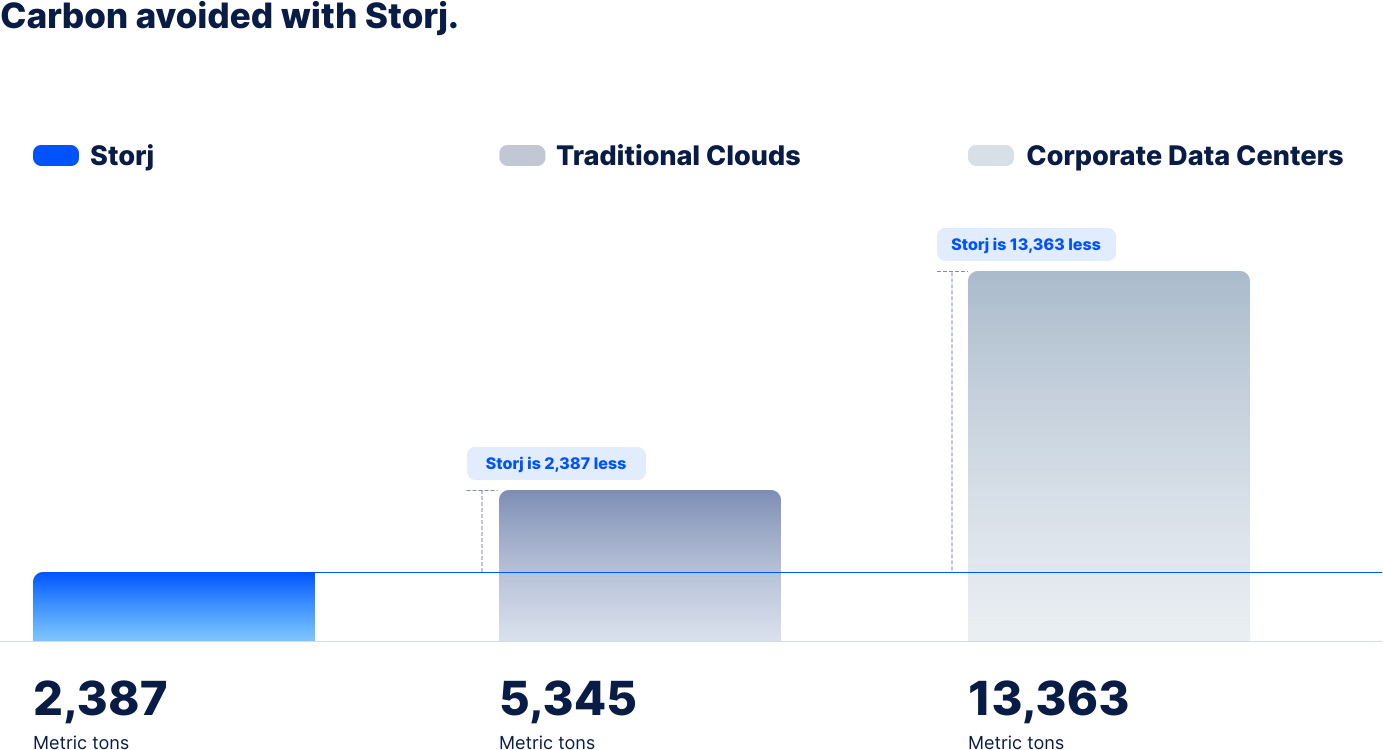
Storj commitment
Better for the environment.
As countries begin to require that companies report their carbon impact, customers all over the world trust Storj to help meet their sustainability objectives.

“We need to think differently about technology usage. The old maxim of reduce, reuse, and recycle remains relevant today and can be applied to IT operations. Organizations must question how efficiently they use technology. To truly reduce carbon impact, IT organizations need to tap into more efficient and sustainable ways to source the technology needed to run the business.”
Get started for free
Work without waiting.
Make the switch and get local-like performance from the globally distributed cloud.